Ericsson and HBL Engineering Integrate Kavach 4.0 with 5G Standalone: A Giant Leap Toward Next-Gen Railway Safety
Swedish telecom giant Ericsson and India's HBL Engineering have integrated the indigenous Kavach 4.0 Automatic Train Protection (ATP) system with a 5G Standalone (5G SA) network at HBL's R&D lab in Hyderabad.
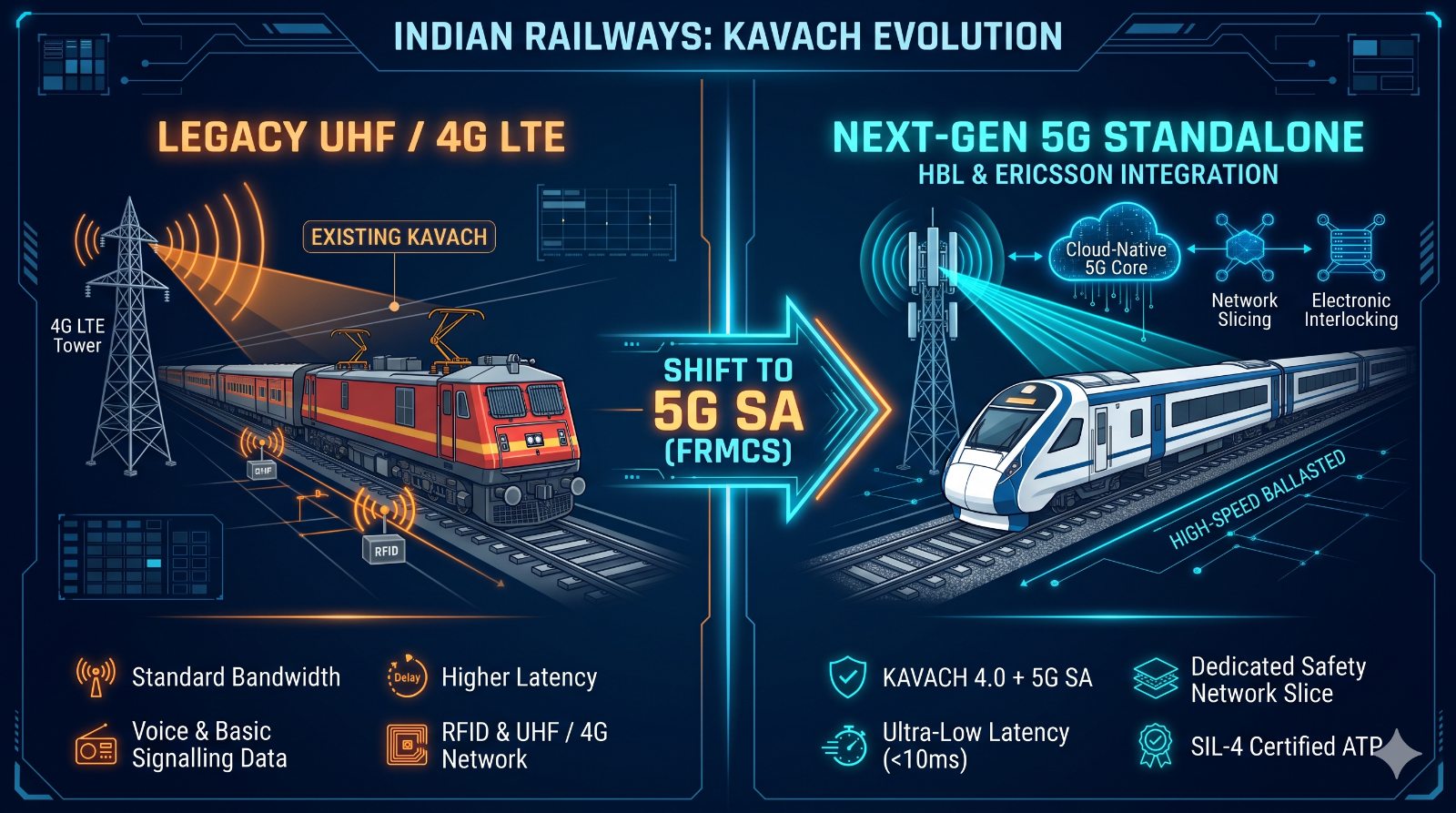
Moving Beyond UHF and 4G LTE Toward FRMCS
Traditionally, Kavach relies on UHF radio frequencies (406–470 MHz) and is being progressively upgraded to 4G LTE across major corridors. However, with tracks supporting speeds of 110 km/h and above now spanning 84,244 km—nearly 80% of the Indian Railways network—traffic density and data demands are rising rapidly.
By pairing HBL's Kavach 4.0 hardware with Ericsson's cloud-native 5G SA network, the two companies are laying the groundwork for the Future Railway Mobile Communication System (FRMCS), the global 5G-based successor to legacy railway telecom standards. Unlike non-standalone 5G networks that still depend on a 4G core, 5G SA offers end-to-end 5G capabilities, including dedicated network slicing, ultra-low latency, and zero-trust cybersecurity.
Key Capabilities Unlocked by 5G SA + Kavach 4.0
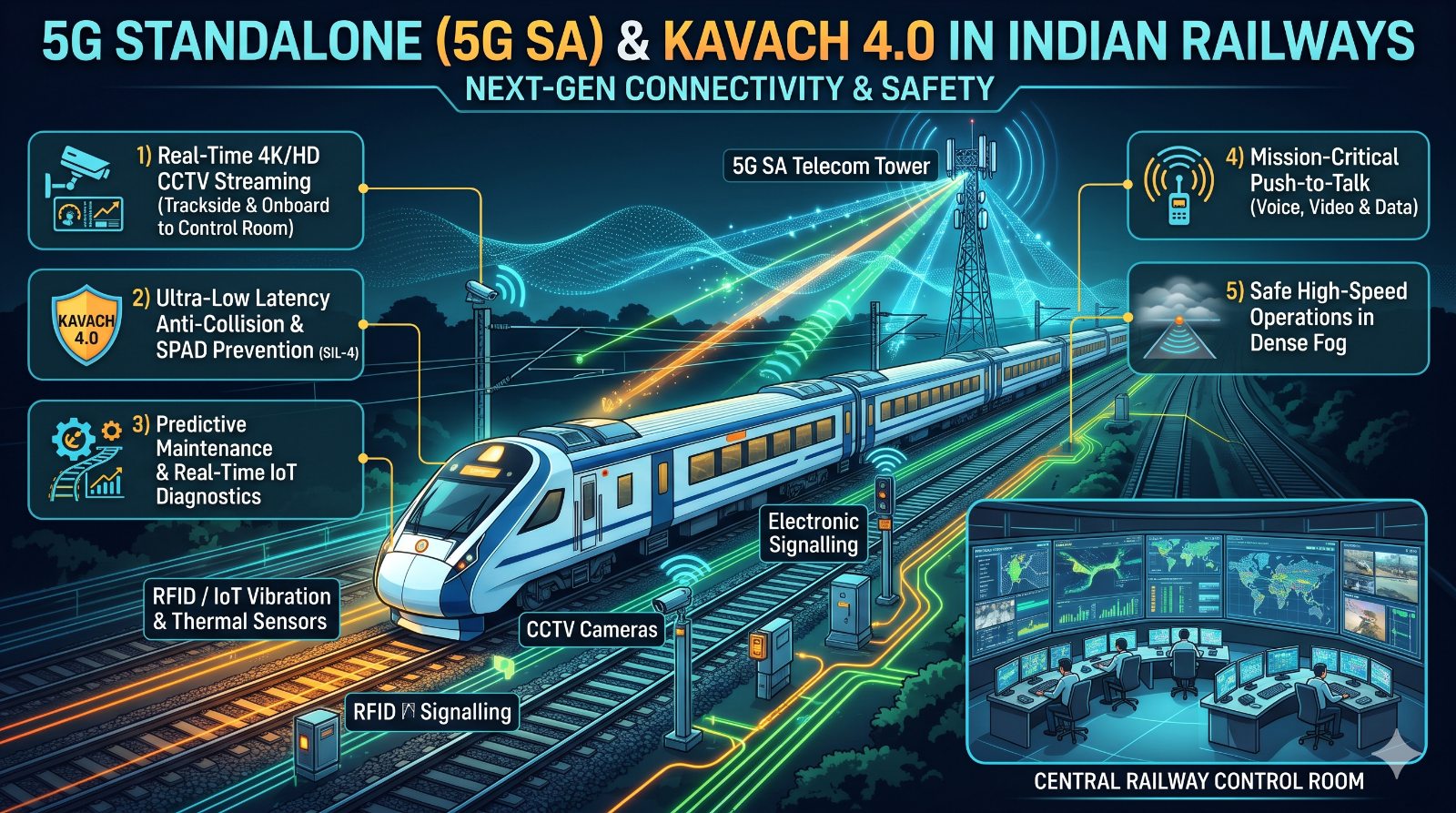
▪ Instant Collision and SPAD Prevention: Continuous, ultra-low-latency communication between onboard locomotive units, station Kavach terminals, and electronic interlocking systems prevents Signal Passing at Danger (SPAD) and applies brakes automatically against driver error or fatigue.
▪ Real-Time HD Video Surveillance: High-bandwidth 5G channels enable uninterrupted live streaming from onboard coach cameras and trackside CCTV directly to central railway control rooms.
▪ Mission-Critical Communications: Railway staff, loco pilots, and controllers can use mission-critical push-to-talk (MCPTT), live video, and real-time data sharing over a prioritized network slice.
Predictive Maintenance and All-Weather Operations: Real-time telemetry from rolling stock and track sensors supports predictive maintenance, while in-cab signalling ensures safe high-speed operations even during dense winter fog.
As Indian Railways scales up Kavach 4.0 deployment across thousands of route kilometers, the HBL–Ericsson 5G SA integration proves that India's homegrown safety technology is ready for the future of high-speed, connected rail operations.
Watch My Complete Video Breakdown
Want to see how the 5G Standalone Kavach 4.0 system works in action—along with the latest manufacturing and EN 15085-2 CL1 welding certification updates on Kinet's Vande Bharat Sleeper train? Watch our full detailed explainer video below: