Powering India’s Logistics: Dedicated Freight Corridor Sets Record-Breaking Milestones
India’s Dedicated Freight Corridor Corporation of India Limited (DFCCIL) has set two historic benchmarks in late 2026. In October 2026, the network operated a record 14,659 freight trains (averaging 473 trains daily), followed by its highest-ever single-day interchange of 949 freight trains + 3 light engines (950+ total movements) on November 7, 2026 across the Eastern and Western corridors. Together, these milestones highlight faster cargo turnaround, decongested passenger tracks for Indian Railways, and lower supply chain costs under the National Logistics Policy.
Record-Breaking Operational Milestones
▪ Highest-Ever Monthly Train Run (October 2026):
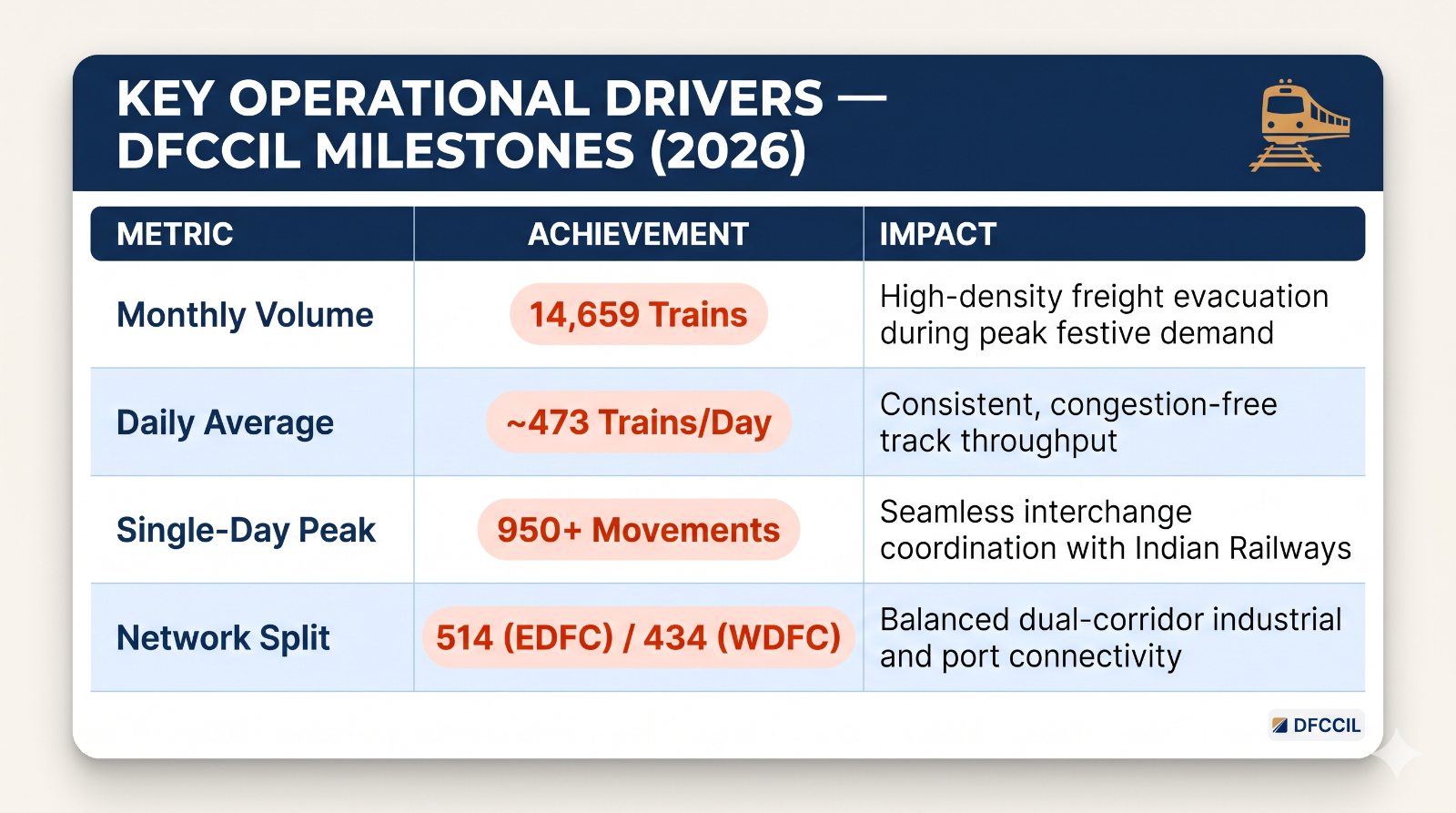
DFCCIL operated 14,659 freight trains in a single month, achieving an unprecedented daily average of 473 freight trains per day to meet surging national cargo demand.
▪ All-Time Peak Single-Day Interchange (November 7, 2026):
The network recorded its highest-ever single-day train interchange of 949 freight trains + 3 light engines (LE) (over 950+ total train movements). This milestone surpassed the previous record of 946 trains + 6 LE set on October 6, 2026.
▪ Corridor-Wise Peak Performance:
Eastern DFC (EDFC): Handled 514 freight trains + 2 LE
Western DFC (WDFC): Handled 434 freight trains + 1 LE
Key Operational Drivers
Why These Records Matter for India’s Economy
1.Supply Chain Velocity: High-speed, timetable-oriented freight paths significantly cut transit times between manufacturing hubs in northern India and maritime gateways along the western coast.
2.Double-Stack Container Efficiency: Purpose-built electrified tracks allow heavy-haul and double-stack container trains, carrying twice the volume per rake compared to traditional lines.
3.Decongestion of Passenger Lines: Shifting bulk commodity and container traffic to dedicated freight corridors frees up capacity on the conventional Indian Railways passenger network, enhancing punctual passenger travel.
4.Reduction in Logistics Costs: By transitioning cargo from roads to electrified rail corridors, the DFC supports India's National Logistics Policy goals—lowering carbon emissions and bringing national logistics overhead closer to global benchmarks.