RVNL Q2 FY27 Results Decoded: Why Profit Rose Despite Lower Revenue, Rs 1,500 Crore Vande Bharat Sleeper Push, and Q3-Q4 Execution Targets
Rail Vikas Nigam Limited (RVNL) has declared its Q2 FY27 financial results for the July to September 2026 quarter, reporting a 10 percent year-on-year jump in consolidated net profit to Rs 253.71 crore even as operating revenue declined by 8.2 percent to Rs 4,701 crore. Beyond the surface numbers, the official exchange filing reveals three major updates for railway followers and investors: a sharp turnaround in operating cash flow to Rs 589.39 crore, a Rs 375 crore corporate guarantee backing a Rs 1,500 crore Exim Bank loan for the Kinet Railway Solutions Vande Bharat Sleeper manufacturing venture ahead of its December 2026 prototype timeline, and a strong execution push required in Q3 and Q4 to meet management's 15 percent full-year growth target.
The Real Reason Behind the Profit Jump
On a quarter-on-quarter basis, RVNL's recovery after the June quarter is clear. Revenue grew 8.8 percent compared to Rs 4,321 crore in Q1 FY27, while net profit jumped by over 56 percent from Rs 159 crore. On a year-on-year basis, RVNL improved its core operational efficiency by cutting direct project operating expenses by 12.3 percent to Rs 4,188 crore. This pushed operating EBITDA up by 19.5 percent to Rs 264 crore and improved the operating margin from 4.3 percent last year to 5.6 percent in Q2 FY27.
Rs 1,500 Crore Funding Push for Vande Bharat Sleeper Manufacturing
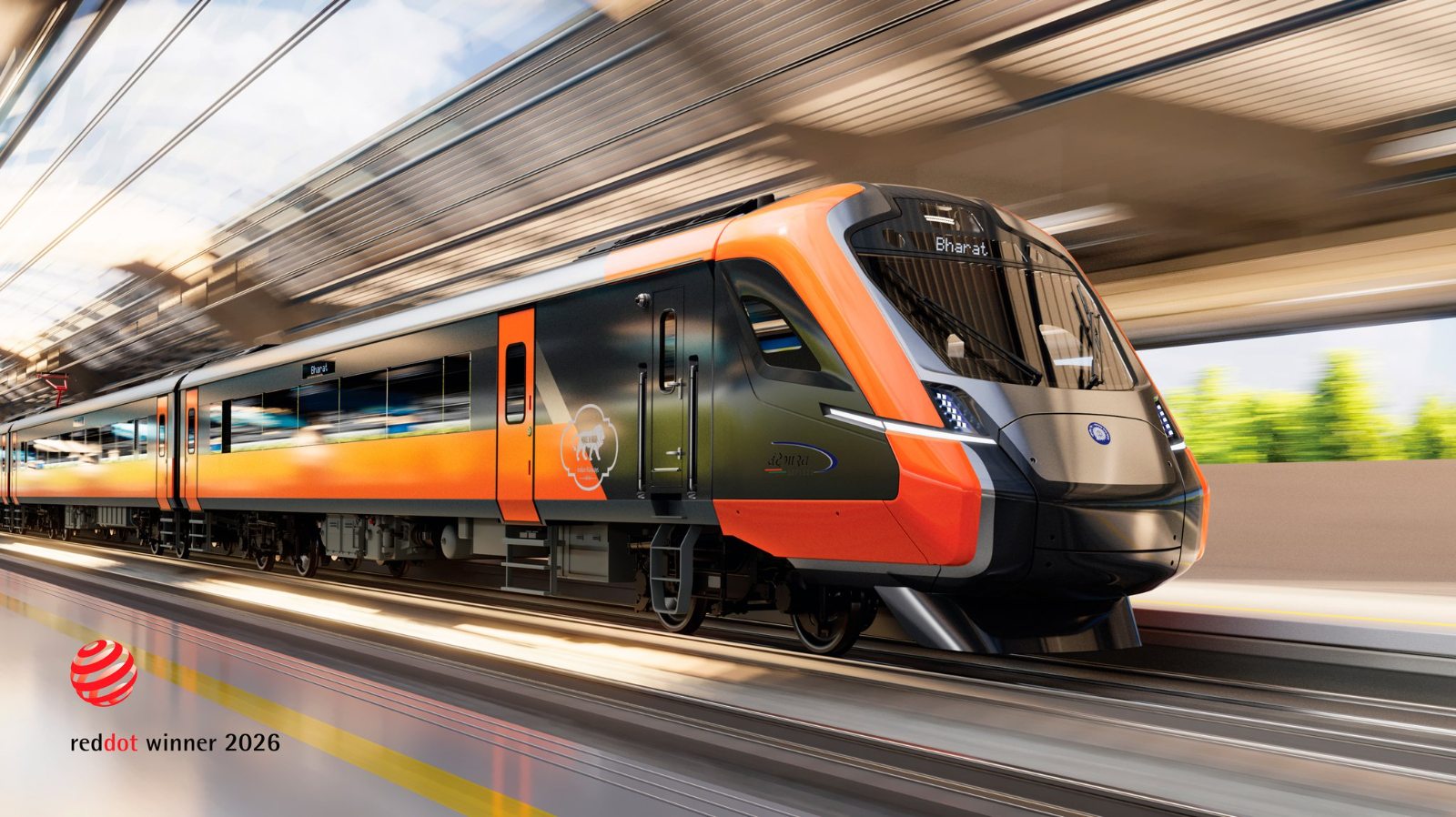
The biggest strategic announcement tucked inside the Q2 board outcome is directly linked to RVNL's train manufacturing ambitions. The RVNL Board approved an unconditional corporate guarantee of up to Rs 375 crore in favour of the Export-Import Bank of India (Exim Bank). This guarantee backs a proposed Rs 1,500 crore term loan for Kinet Railway Solutions Private Limited (KRSL), the joint venture in which RVNL holds a 25 percent equity stake.
KRSL is executing the landmark contract to manufacture and supply 120 Vande Bharat Sleeper trainsets at the Marathwada Rail Coach Factory in Latur along with 35 years of depot maintenance. CMD Saleem Ahmad had earlier indicated that the first Vande Bharat Sleeper prototype under this venture is targeted for rollout in December 2026 but now deadline extended up to March 2027. Backing a fresh Rs 1,500 crore loan facility right now signals that capital deployment for manufacturing is shifting into high gear. Interestingly, RVNL's quarterly filing also shows "Cost of Materials Consumed" rising to Rs 145.59 crore in Q2 FY27—more than double the Rs 62.81 crore recorded in Q1 FY27 and compared to zero a year ago—while RVNL's share of profit from joint ventures jumped nearly five-fold sequentially to Rs 30.43 crore.
Cash Flow Turnaround and Debt Reduction
For long-term followers of the company, the half-yearly (H1 FY27) balance sheet brings encouraging news. In the first six months of the previous fiscal year (H1 FY26), RVNL had a negative operating cash flow of Rs 1,254.83 crore. In H1 FY27, operating cash flow turned strongly positive at Rs 589.39 crore. Alongside better cash generation, RVNL reduced its total borrowings from Rs 4,814 crore in March 2026 to Rs 4,305 crore in September 2026, while cash and bank balances increased to Rs 1,093 crore. The auditor's report remained clean, noting only the ongoing discussion over Rs 1,047.08 crore in old receivables and interest from Krishnapatnam Railway Company Limited (KRCL).
Management Outlook: What to Expect in Q3 and Q4 FY27
RVNL's management, led by CMD Saleem Ahmad, has scheduled the official Q2 FY27 investor conference call for 17 November 2026 at 4:00 PM IST. Entering the second half of the year, management's previously stated guidance sets a clear benchmark for Q3 and Q4:
1. H2 Execution Catch-Up: Management has guided for roughly 15 percent full-year revenue growth and 15 to 20 percent PAT growth in FY27. While H1 consolidated PAT is already up 13.25 percent at Rs 413.23 crore, H1 revenue stands flat at Rs 9,022 crore. This means Q3 and Q4 will need rapid post-monsoon billing across the Rs 40,000 crore of active works currently in progress out of the total Rs 93,492 crore order book.
2. Shifting the Business Mix: Currently, about 63 percent of RVNL's revenue comes from traditional railway nomination works (which earn 8 to 10 percent margins), while competitive bidding and consultancy works contribute 37 percent. Over the next three years, RVNL aims to bring this ratio to 50:50 by targeting Rs 20,000 crore to Rs 25,000 crore in annual order inflows across metro, power transmission, BharatNet optical fiber, PSU consultancy (which gives around 7 percent margin), and international projects in Africa, West Asia, and Europe (where margins reach 15 to 20 percent).
In simple terms, RVNL is transitioning from a pure railway track-and-electrification agency into an integrated infrastructure and rolling-stock player. How quickly it converts its Rs 93,492 crore order book into billed revenue in Q3 and Q4—and delivers the December 2026 Vande Bharat Sleeper milestone—will set the direction for the rest of the financial year.