Spain High-Speed Rail Disaster: How a Deadly Signal Blackout and Dispatch Error Killed at Least 69
A comprehensive breakdown of the deadly 2026 Toledo high-speed train collision in Spain, explaining how an LZB signaling failure and dispatch error led to at least 69 deaths, with a historical comparison to the Adamuz and Santiago de Compostela rail tragedies. Focus Keywords: Spain train crash 2026, Toledo high speed train collision, Renfe AVE Iryo crash, Spain rail disaster, LZB signaling failure Spain
On Wednesday, 28 October 2026, at 08:54 CET, Spain experienced its deadliest high-speed rail disaster to date. A state-owned Renfe AVE train traveling from Madrid to Seville slammed into the rear of a stationary private Iryo bullet train near Urda and Los Yébenes in the province of Toledo.
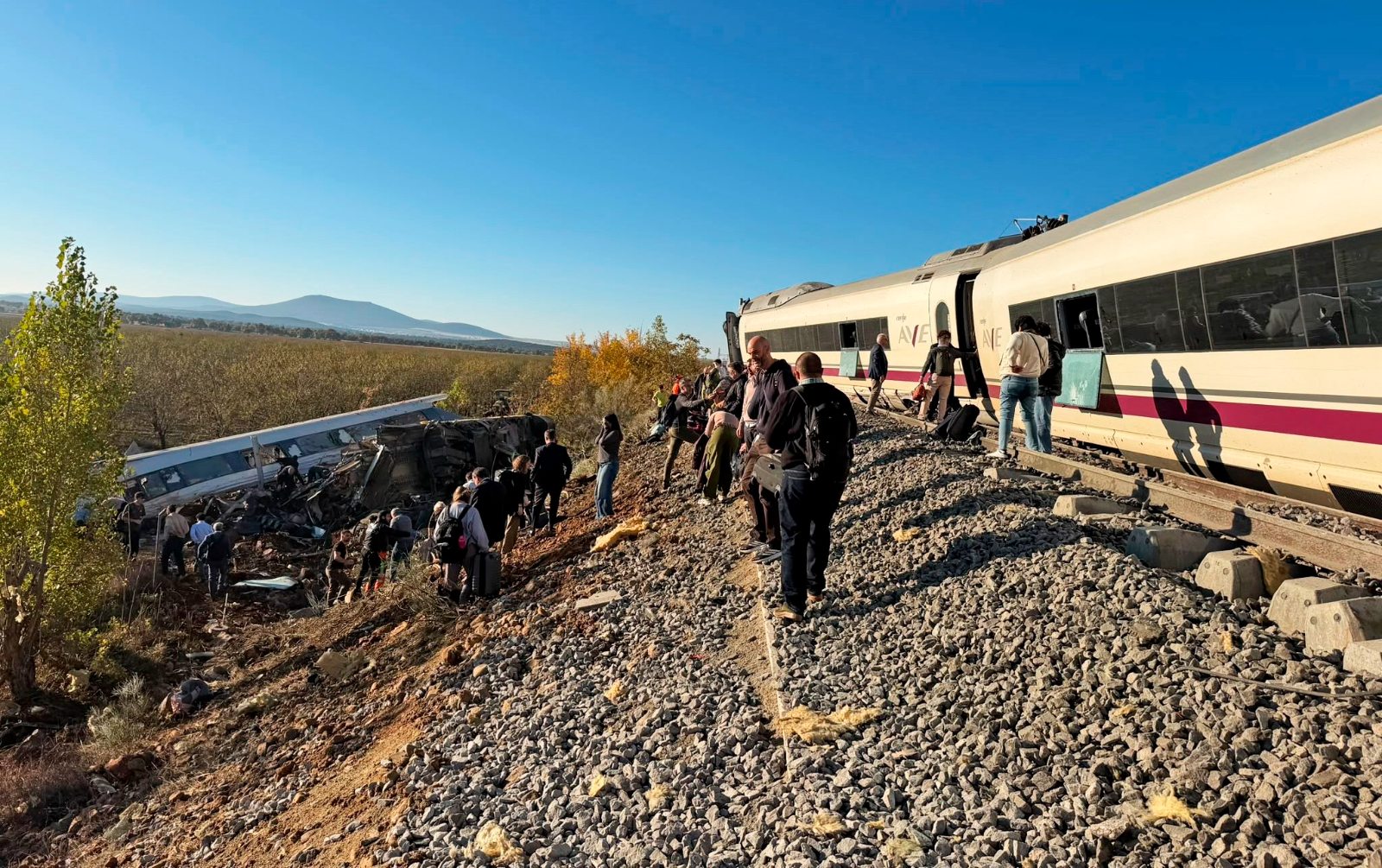
At least 69 people were killed and more than 179 injured (with 58 hospitalized and 15 in critical condition). The disaster was triggered by a sudden blackout in the automated German-engineered LZB signaling system across a 63-kilometer stretch, followed by an "inexplicable" manual dispatch order from infrastructure manager ADIF that authorized the trailing AVE train to speed into an occupied section of track.
The crash marks the second fatal high-speed accident on the Madrid–Seville corridor in 2026, coming nine months after the Adamuz derailment in January that claimed 46 lives, triggering nationwide mourning and intense scrutiny over the safety of Spain's railway network.
◆ Incident Overview: Key Facts & Timeline
| Parameter | Details |
|---|---|
| Date & Time | Wednesday, 28 October 2026, at 08:54:03 CET (07:54 GMT) |
| Location | Kilometer marker 118, between Urda and Los Yébenes, Toledo (Castilla-La Mancha), ~150 km south of Madrid |
| Railway Line | Madrid–Seville High-Speed Rail Line (LAV Madrid–Sevilla) |
| Train 1 (Front / Stationary) | Iryo 6076 (Frecciarossa 1000 EMU), operated by ILSA/Iryo; 147 passengers and crew |
| Train 2 (Rear / Impacting) | Renfe AVE 2080 (Renfe Class 103), operated by Renfe; 397 passengers and crew |
| Route | Both trains: Madrid-Puerta de Atocha to Seville-Santa Justa |
| Total Casualties | 74+ fatalities, 179+ injured (58 hospitalized, 15 critical) |
| Primary Operators Involved | Renfe (state rail carrier), Iryo (private consortium), ADIF (infrastructure administrator) |
◆ Step-by-Step Breakdown: How Did the Collision Happen?
The disaster unfolded over a critical 24-minute window combining an automated infrastructure blackout with fatal procedural breakdowns:
Sequential Departures from Madrid (07:54 & 08:00 CET): At 07:54 CET, private operator Iryo’s service 6076 departed Madrid's Puerta de Atocha station bound for Seville–Santa Justa. Six minutes later, at 08:00 CET, state operator Renfe’s AVE train 2080 departed along the exact same southbound track, also bound for Seville.
The LZB Signaling Blackout (08:30 CET): Around 08:30 CET, three central railway computers operated by infrastructure manager ADIF suffered a communications failure. This knocked out the line's German-built LZB continuous automatic train control and speed supervision system across a 63-kilometer stretch. As designed, the fail-safe system triggered an automatic emergency stop on all six trains operating on that section, bringing the Iryo train to a complete halt on the mainline track.
The Fatal Dispatch Override (08:36 CET): Operating regulations dictate that when automated systems fail, traffic shifts to manual dispatch under degraded-operation rules requiring visual clearance, stop-and-proceed instructions, and strict speed caps. However, at 08:36 CET, an ADIF traffic controller in Madrid authorized the trailing Renfe AVE train to resume its journey "normally," despite red signals and active occupancy data indicating a train was stationary ahead.
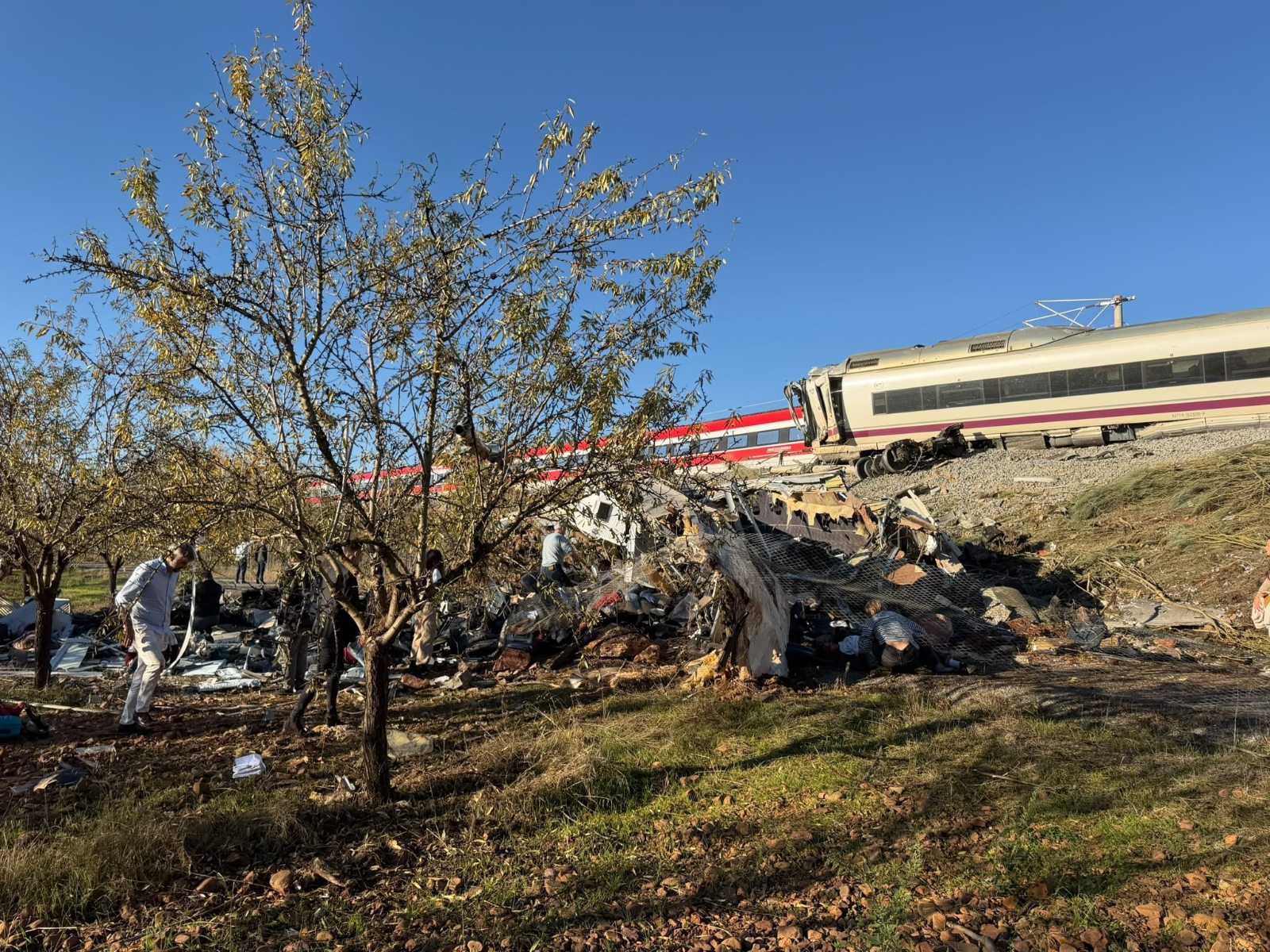
High-Speed Rear-End Impact (08:54 CET): The Renfe AVE train covered 25 kilometers in roughly 17 minutes. At 08:54 CET, near kilometer marker 118, it struck the rear coach of the stationary Iryo train at an estimated speed of up to 200 km/h. The impact crushed the forward coaches of the AVE, tore apart the rear of the Iryo train, derailed two cars down an embankment, and dislodged a steel rail that pierced through a passenger compartment.
◆ Casualties and Prominent Figures
Casualty Toll: Emergency services confirmed at least 69 deaths and 179 injured, with 58 admitted to regional hospitals and 15 in critical condition.
Fátima Báñez: Spain’s former Minister of Employment and Social Security (who served from 2011 to 2018) was seated in the rear coach of the Iryo train and died in the crash.
Marisa Manchado: Renowned Spanish opera and classical music composer was aboard the train and reported missing.
Double Survivor: One surviving passenger had also survived the January 2026 Adamuz rail disaster without physical injury.
◆ Historical Comparison: Toledo vs. Past Spanish Rail Disasters
| Past Rail Disaster | Comparison with 2026 Toledo High-Speed Crash |
|---|---|
| 2026 Adamuz Rail Disaster (18 Jan 2026) | • Casualties: 46 dead, 292 injured. • Route: Same Madrid–Seville high-speed line. • Root Cause: Physical track defect (poor rail weld and inspection lapses) causing derailment. • Key Difference: Adamuz was a mechanical infrastructure maintenance failure, whereas Toledo was an operational failure involving signaling computer blackouts and manual dispatch errors. |
| 2013 Santiago de Compostela (24 July 2013) | • Casualties: 80 dead, 145 injured. • Route: Olmedo–Zamora–Galicia line. • Root Cause: Train driver distraction and severe overspeeding (179 km/h in an 80 km/h curve). • Key Difference: Santiago was a single-train curve derailment where automatic braking (ERTMS) was missing before the curve, whereas Toledo occurred on a straight high-speed line where the automated system successfully halted trains but was dangerously overridden by human dispatchers. |
◆ Immediate Aftermath & Political Fallout
Three Days of Mourning: Spanish Prime Minister Pedro Sánchez declared three days of official national mourning, while King Felipe VI and Queen Letizia visited injured victims in regional hospitals.
Corridor Suspension: All high-speed rail traffic between Madrid and Andalusia was halted indefinitely for technical investigations and track reconstruction.
Postponements: The Royal Spanish Football Federation (RFEF) postponed all 24 scheduled Copa del Rey matches.
Protests: Protests erupted outside the Ministry of Transport in Madrid, with labor unions and opposition lawmakers demanding the resignation of Transport Minister Óscar Puente over high-speed line safety and maintenance practices.